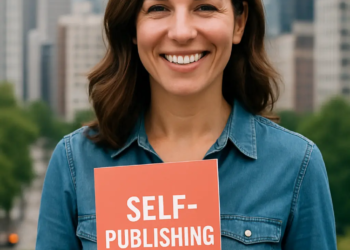

Picture this – It’s late at night, and you’ve just typed the last sentence of your manuscript. You lean back in your chair, basking in the glow of your computer screen and the satisfaction of having written your first book. The euphoria soon fizzles out when you start thinking about the next steps. Where should you begin? This might seem daunting, especially if you opt for self-publishing. However, with the right information at your disposal, getting started with self-publishing your first book can be a smooth and fulfilling process.
Self-publishing is gradually gaining popularity among new authors due to its cost-effectiveness and the control it offers over the entire publishing process. In this article, we will help you to untangle the complexities of self-publishing. The key points we will cover include understanding self-publishing, preparing your manuscript, finding an editor, designing your book cover, formatting your book, choosing the right self-publishing platform, pricing your book, and marketing.
1. Understand Self-Publishing:
Self-publishing means publishing a book independently, without using a traditional publishing house. It involves all aspects of the publishing process, from writing, editing, designing, formatting to distribution and marketing. The most significant advantage of self-publishing is that you maintain complete control over your work and its profits.
2. Prepare Your Manuscript:
After completing your manuscript, it’s critical to revise and refine it until you’re satisfied. While revising, focus on grammatical errors, redundancies, inconsistencies in the plot or character development, and other areas for improvement.
3. Find an Editor:
An editor is a crucial part of self-publishing. They can detect flaws that you might overlook and provide constructive feedback to improve your book. Depending on your budget, you can choose between experienced freelance editors or editing services provided by self-publishing platforms.
4. Design Your Book Cover:
Often, readers judge a book by its cover. Therefore, ensure your book cover is attractive and professional. Many self-publishing platforms offer design services, or you can hire a freelance designer. or you can choose Namya Press cover designing tool.
5. Format Your Book:
The formatting must be consistent throughout your book. This includes font type and size, header and footer, page numbers, and text alignment. Having a well-formatted book not only improves readability but also imparts a professional look.
6. Choose the Right Self-Publishing Platform:
There are many self-publishing platforms available, such as Amazon Kindle Direct Publishing (KDP), Apple’s iBooks, Smashwords, Lulu and Namya Press Each platform has different royalty rates, distribution channels, and services. Choose one that best suits your needs and budget.
7. Price Your Book:
Pricing your book appropriately is a crucial aspect of self-publishing. Too high, and you might lose potential readers; too low, and you may not make a profit. It’s key to research what other books in your genre are priced at and consider your costs.
8. Market Your Book:
Marketing is vital to guarantee your book reaches its intended audience. Social media, book reviews, author websites, and email marketing are effective ways to promote your book.
In conclusion, self-publishing your first book might initially seem overwhelming but with the right preparation and understanding, it’s entirely feasible. With self-publishing, you have complete control over your book’s destiny, in a process that enables you to learn, grow, and potentially succeed as an author. The key is to be patient, meticulous, and proactive throughout this journey. And remember, every successful author was once a newbie, just like you.
Frequently Asked Questions for First-Time Self-Publishing Authors
What is the first step I should take when self-publishing my first book?
Begin by finalizing your manuscript — ensuring your content is complete and polished. Then prepare your cover design, metadata (title, author name, summary, ISBN if required), and decide which formats (eBook, paperback, hardcover) you want to publish. Having all elements ready simplifies the publishing process.
Do I need to pay anything upfront to self-publish with a free publishing plan?
Not necessarily. With many free-publishing plans, authors can upload their manuscript, cover, and metadata without upfront fees. Costs may only arise when ordering physical copies or opting for additional services such as editing, cover design, or promotion.
What formats can I publish — eBook, paperback, hardcover — when I’m just starting out?
Most self-publishing platforms support eBook and paperback formats by default. Hardcover or special edition options may be available depending on the platform’s capabilities and production requirements. Starting with eBook + paperback is often the easiest for first-time authors.
How long does it typically take from final manuscript to going live?
The timeframe varies based on the platform and how quickly you complete formatting and upload your files. For a standard eBook + paperback setup, many authors can go live within a few days — assuming the manuscript, cover, and metadata are ready and meet technical requirements.
Can I update or revise my book after publishing if I find errors or want to make improvements?
Yes. Most self-publishing platforms allow authors to upload updated files, revise metadata, or even release new editions. This flexibility helps you correct errors and improve your book after initial publication.
Do I retain full rights to my book if I self-publish?
Yes — self-publishing gives you full control over your work. You retain copyright and publishing rights, decide pricing, distribution, and can choose to republish or update as needed. You are not bound to give away rights as in traditional publishing unless you sign a separate agreement.
How can I reach readers globally when self-publishing for the first time?
Use a publishing platform that supports international distribution, eBook stores, print-on-demand, and global shipping. Optimize your metadata (title, keywords, description), choose global sales channels, and promote via social media or author networks to maximize reach.
What mistakes should I avoid when self-publishing my first book?
Avoid rushing to publish without proper editing, using a weak cover design, skipping formatting checks, neglecting metadata, and failing to plan marketing. Taking time to do each step carefully yields better reader experience and sales potential.
Do I need a separate ISBN for each format (eBook, paperback, hardcover)?
It depends on platform rules and your target markets. Many platforms issue ISBNs automatically for each format. If you’re distributing globally or in multiple formats, ensure you follow ISBN guidelines to avoid duplication or listing errors.
How can I track sales, royalties, and performance after publishing?
Use the dashboard or reporting tools provided by your self-publishing platform. Most platforms give real-time or periodic reports of sales, royalties, regional data, and performance analytics — enabling you to monitor how your book is doing and plan marketing accordingly.